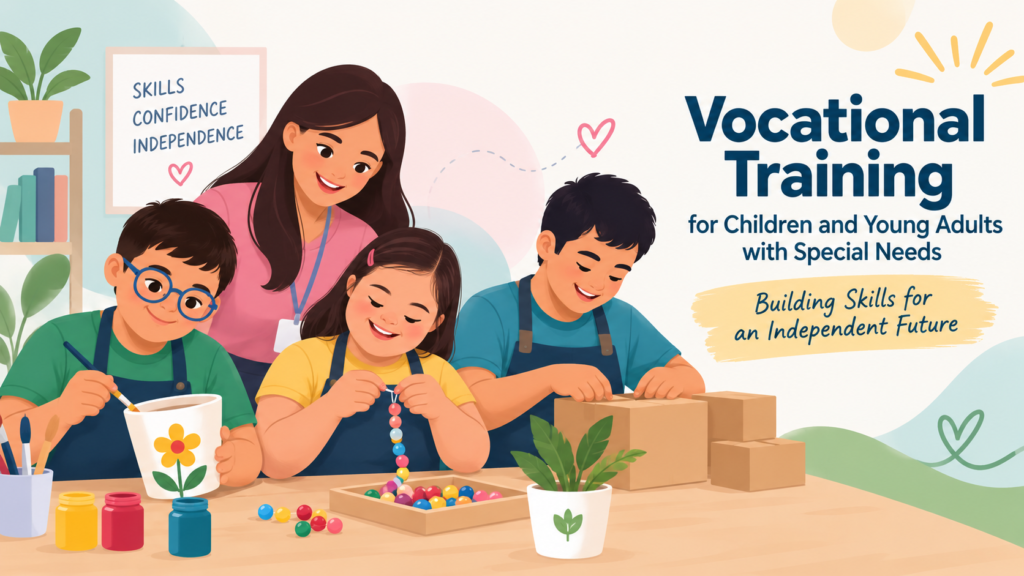
Vocational Training for Children and Young Adults with Special Needs
Building Skills for an Independent Future
Vocational training helps children and young adults develop practical life and work skills that support greater independence. Through meaningful, hands-on learning experiences, individuals can build confidence, responsibility, communication, social interaction, and self-reliance.
While academic education is important, not every child learns in the same way or follows the same educational path. Many children and young adults thrive when they are given opportunities to learn through practical experiences that match their interests, abilities, and strengths.
What is Vocational Training?
Vocational training is a structured program that teaches practical, job-related, and life skills. For children and young adults with special needs, vocational training is designed according to their abilities, developmental level, interests, and future goals.
The purpose is not simply to prepare someone for employment. It also develops essential everyday abilities such as following instructions, independently completing tasks, managing time, interacting with others, and solving simple problems.
Why is Vocational Training Important?
Traditional classroom performance does not always reflect a learner's abilities. Vocational training helps identify strengths and transform them into useful, meaningful skills.
Independence & Confidence
Encourages self-reliance and builds confidence through meaningful achievement.
Attention & Concentration
Strengthens attention span, focus, routine, and task completion.
Motor Development
Practical activities improve coordination, dexterity, and motor skills.
Communication
Improves interaction, teamwork, communication, and social participation.
Responsibility
Encourages discipline, accountability, work habits, and routine.
Future Opportunities
Creates pathways towards employment, self-employment, and independent living.
Who Can Benefit?
Vocational training can support adolescents and young adults with a wide range of developmental and learning needs.
Each training program should be individualized according to the learner's interests, abilities, communication level, physical skills, and future goals.
Objectives of Vocational Training
Skills Developed Through Vocational Training
01. Work Readiness
- Following instructions
- Maintaining attention
- Completing assigned tasks
- Working independently
- Time management
- Organizing materials
- Cleaning the workspace
- Taking responsibility
02. Fine Motor Skills
- Painting
- Threading beads
- Paper folding
- Clay modelling
- Cutting and pasting
- Packaging
- Sorting objects
- Simple assembly
03. Cognitive Skills
- Memory
- Attention
- Problem-solving
- Sequencing
- Planning
- Decision-making
- Understanding cause and effect
04. Communication Skills
- Asking for help
- Following verbal instructions
- Communicating needs appropriately
- Working with peers
- Participating in group activities
- Developing workplace etiquette
05. Social Skills
- Sharing materials
- Waiting for turns
- Teamwork
- Respecting others
- Greeting people
- Accepting feedback
- Managing emotions
Common Vocational Training Activities
Activities can be selected and adapted according to each individual's interests, strengths, learning needs, and abilities.
🎨 Art & Craft
Pot painting, fabric painting, canvas painting, glass painting, leaf art, greeting cards, and decorative crafts.
🕯 Candle Making
Measuring materials, pouring wax safely, using moulds, adding colours and fragrances, and packaging.
📿 Jewellery Making
Bead stringing, bracelet making, necklaces, keychains, and decorative accessories.
♻ Eco-Friendly Crafts
Paper bags, envelopes, decorative flowers, quilling, recycled crafts, and festival decorations.
🌱 Gardening
Planting seeds, watering plants, removing weeds, indoor plant care, and basic landscaping.
📦 Packaging & Assembly
Sorting, counting products, packing, labelling, folding boxes, and simple assembly tasks.
🥗 Cooking & Kitchen Skills
Washing vegetables, measuring ingredients, simple snacks, sandwiches, juices, and cleaning utensils.
Individualized Vocational Training
Every learner has unique strengths and challenges. Training goals should therefore be individualized by considering:
Individualized goals help ensure steady progress and meaningful outcomes.
Role of Parents
Parents can reinforce vocational skills at home by:
- Encouraging daily practice
- Assigning simple household responsibilities
- Appreciating effort and achievements
- Promoting independence
- Providing opportunities to use learned skills
- Supporting participation in community activities
Role of Therapists & Special Educators
A multidisciplinary team may include:
- Special Educators
- Occupational Therapists
- Physiotherapists
- Speech and Language Therapists
- Psychologists
- Vocational Trainers
Together, professionals assess strengths, establish realistic goals, adapt activities, monitor progress, and support the learner's transition toward greater independence.
Preparing for Employment and Independent Living
Vocational training gradually prepares individuals for adult life by developing skills that can be used in real-world environments. Depending on individual abilities, possible outcomes may include:
Even when formal employment is not the primary goal, vocational training provides valuable life skills that can strengthen confidence, participation, independence, and quality of life.
Conclusion
Vocational training is a bridge between learning and living. It helps children and young adults with special needs discover their abilities, build practical skills, and prepare for a more independent and fulfilling future.
Through structured, hands-on activities, learners gain confidence, improve communication, strengthen motor and cognitive skills, and develop a meaningful sense of purpose.
Supporting Every Learner Towards Greater Independence
At GiftAbled Child Development Center, our vocational training program is designed to nurture each individual's strengths through meaningful, engaging, and practical experiences. From painting and candle making to crafts, gardening, packaging, and daily living activities, we focus on empowering every learner to become confident, capable, and as independent as possible.